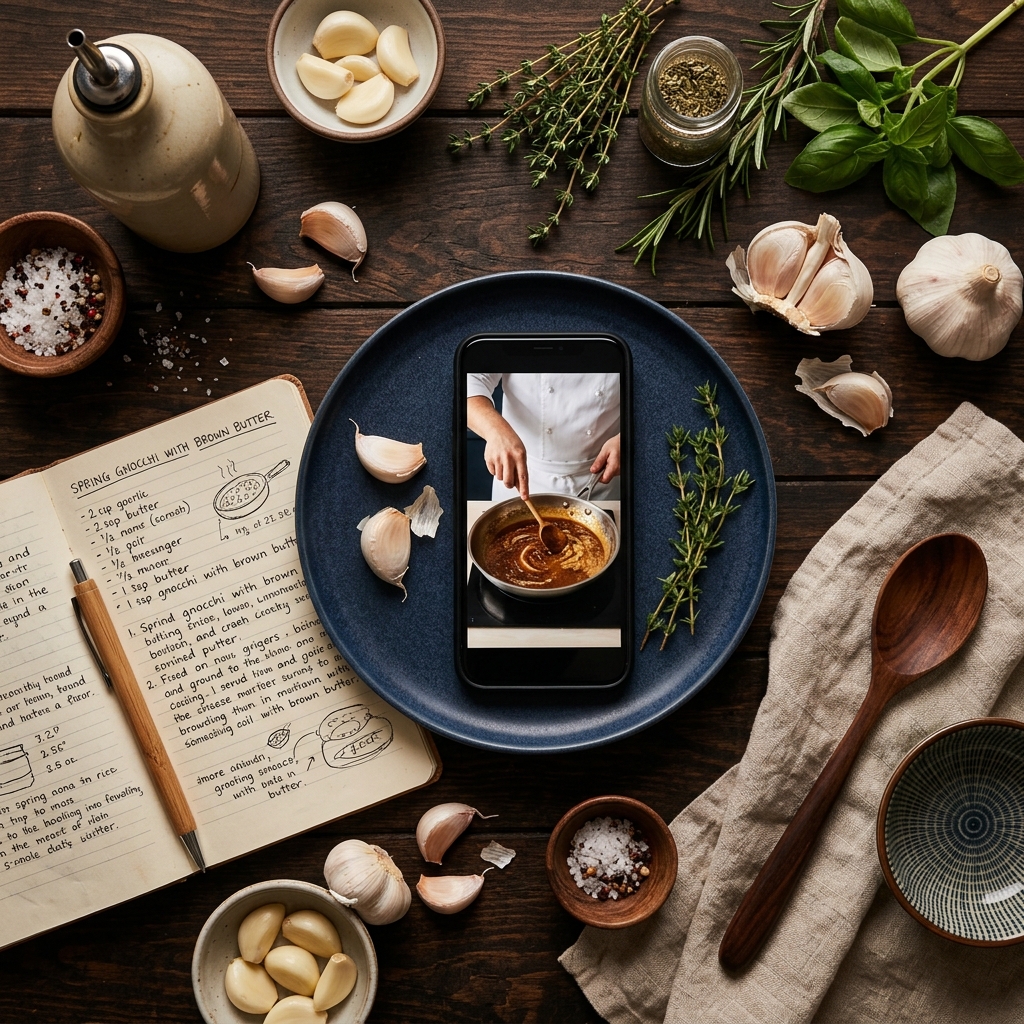
Creators know their recipes by heart. That's why they sometimes forget to mention the things that are second nature to them — but essential for you. Here's what gets lost, and how we catch it.
Here's something that doesn't get talked about enough: the best cooking creators in the world are *bad* at writing recipes. Not because they can't write, and not because they don't know how to cook — but because they know too much. Their expertise is the problem.
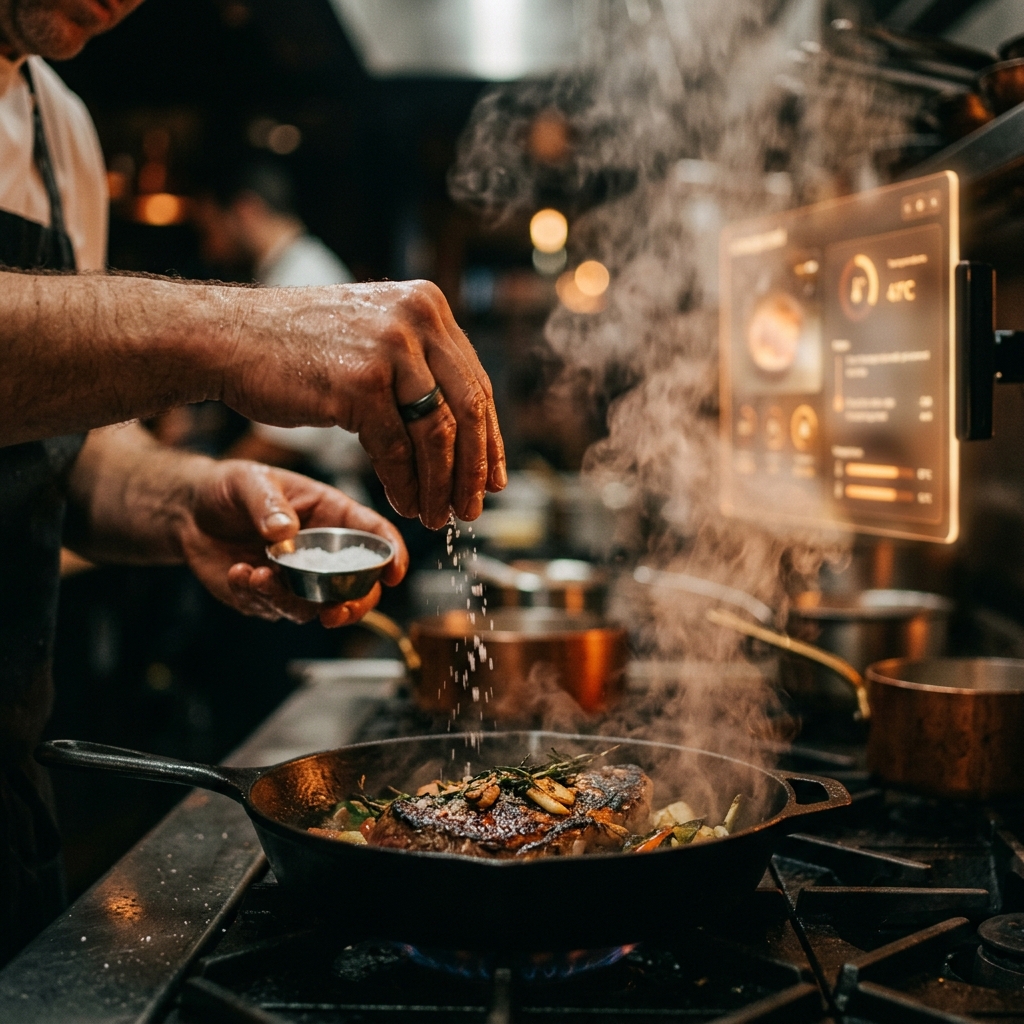
When you've made a dish a hundred times, you stop explaining the steps that have become reflex. You mention salt 'to taste' without saying how much you actually use. You talk about sautéing 'until soft' without saying how long or what to look for. You assume your viewer knows that the pan needs to be properly hot before the oil goes in.
The Curse of Knowledge
Psychologists call this the 'curse of knowledge.' Once you know something well, it becomes very hard to remember what it felt like not to know it. Expert cooks forget that novices don't know when chicken is properly cooked, or that 'a knob of butter' means something specific, or that 'medium heat' is different on every stove.
- Resting time after cooking — mentioned in passing or not at all
- The exact moment to add an ingredient to the pan — shown but not described
- What the dish should smell like at key stages
- How to tell when something is done without a timer
- Substitutions for harder-to-find ingredients
What Video Can Show That Text Cannot
Video has a superpower that text will never have: it can show you things that are almost impossible to describe. The color of properly caramelized onions. The jiggle of a set custard. The sound of a proper sear. These sensory cues are *crucial* to successful cooking, and they live in the video itself.
The ideal recipe is the best of both formats: the precision and scannability of text, combined with the sensory richness of video. That's exactly what we're trying to build at Vidcipe.
When Vidcipe extracts a recipe, it captures both the explicit instructions and the contextual cues the creator gives — temperatures mentioned casually, visual descriptions, timing notes. This is the layer that most people miss when they try to write recipes from memory.
The Ingredient That Is Always Missing
But there's one more thing. Beyond technique and timing, there's something even subtler that recipe videos often skip: the *intention* behind a step. Why do you bloom the spices in oil before adding liquids? Why do you salt pasta water until it 'tastes like the sea'? Why does the dough need to rest?
Understanding the 'why' is what takes you from following a recipe to actually cooking. We're working to surface that context — not just the steps, but the reasoning — in future versions of Vidcipe. Because once you understand why something works, you can adapt, improvise, and make the dish yours.
"A recipe tells you what to do. Understanding tells you what to do when things don't go according to plan."
— Dina Iyanuloluwa
The secret ingredient, in the end, is context. And we're on a mission to make sure you always have it.